Export Regulations and Compliance: A Comprehensive Overview
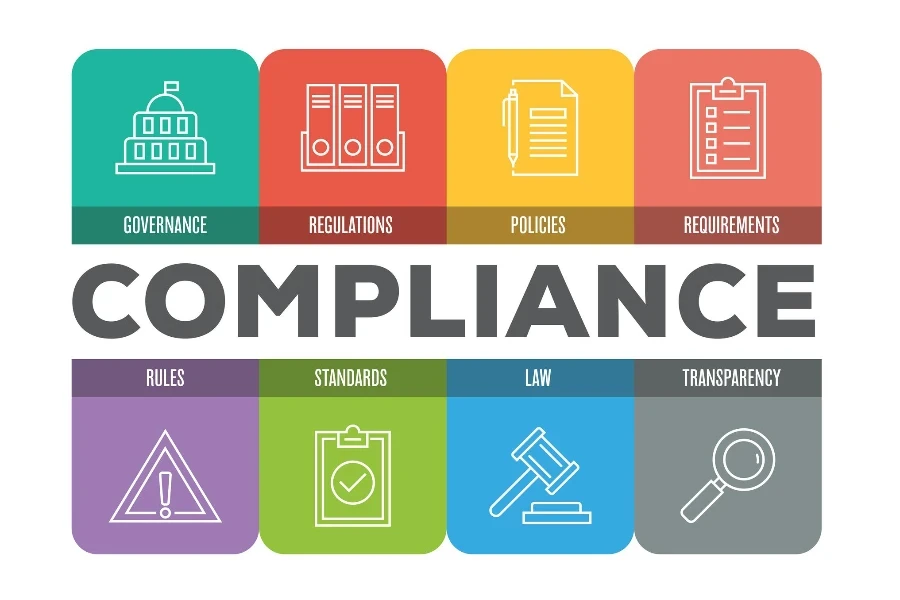
Export regulations and compliance are intricate and ever-changing landscapes that require businesses to navigate complex rules and regulations to avoid penalties and reputational damage.
Understanding Export Regulations and Compliance
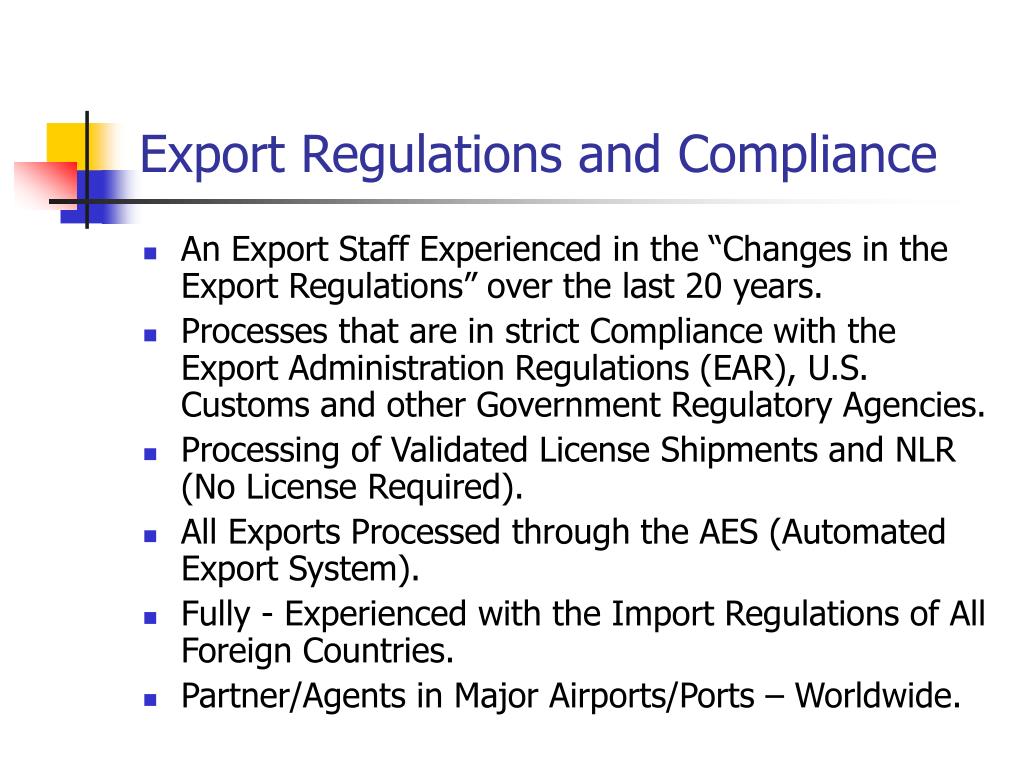
Export regulations and compliance refer to the rules, guidelines, and procedures that control how goods, services, and technology move across international borders. The United States export controls are primarily governed and enforced by the Bureau of Industry and Security (BIS), the Directorate of Defense Trade Controls (DDTC), and the United States Treasury Department's Office of Foreign Assets Control (OFAC).
The Importance of Export Compliance
Export compliance is critical for businesses to ensure that they are operating within the bounds of the law and avoiding penalties, fines, and reputational damage. The consequences of non-compliance can be severe, including seizure of shipments, audits, and hefty penalties. Failing to comply with export regulations can also lead to a loss of business, damaged relationships with customers and partners, and a decrease in stock value.
Export Administration Regulations (EAR)
The Export Administration Regulations (EAR) are a set of regulations administered by the BIS that govern the export and re-export of dual-use items, which are items that have both commercial and military applications. The EAR provides detailed regulations and procedures for the export of controlled items, including licensing requirements, commodity classification, and record-keeping.
International Traffic in Arms Regulations (ITAR)
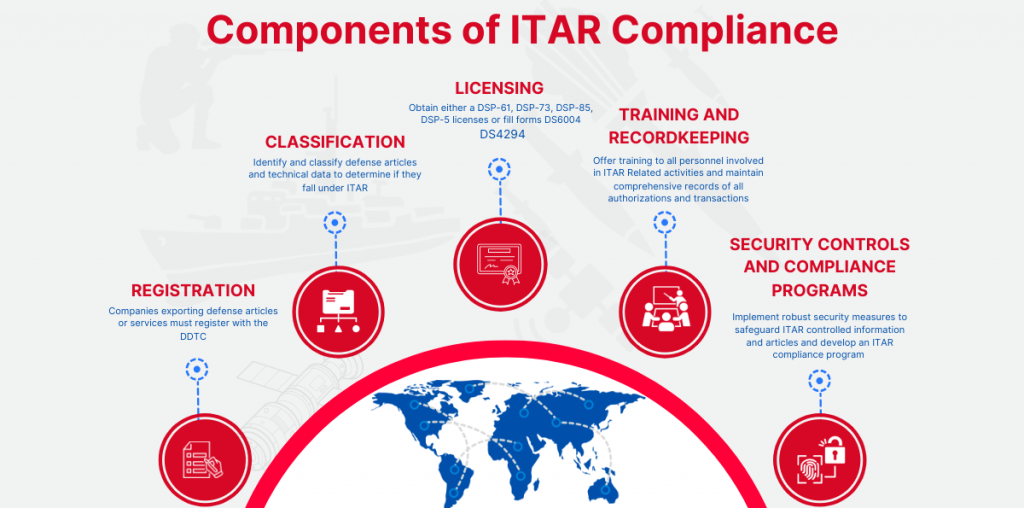
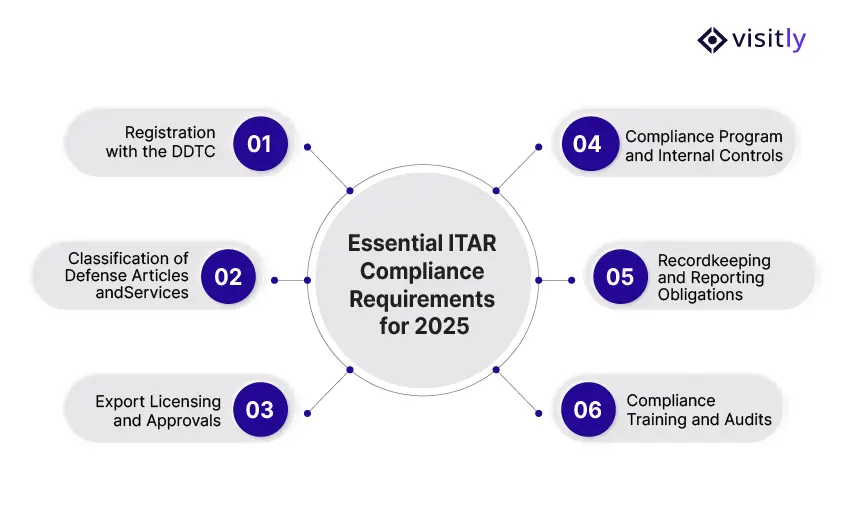
The International Traffic in Arms Regulations (ITAR) are a set of regulations administered by the DDTC that govern the export and import of defense articles and services under the Arms Export Control Act (AECA). The ITAR provides detailed regulations and procedures for the export of defense articles and services, including licensing requirements, classification, and record-keeping.
Office of Foreign Assets Control (OFAC)
The Office of Foreign Assets Control (OFAC) is a division of the U.S. Department of the Treasury that administers and enforces economic and trade sanctions against foreign governments, entities, and individuals. OFAC's sanctions programs are designed to achieve U.S. foreign policy and national security objectives, and businesses must comply with OFAC regulations to avoid penalties and fines.
Key Principles of Export Regulations and Compliance
- Classification: Ensuring that products are properly classified as export-controlled or not.
- Record-keeping: Maintaining accurate and complete records of export transactions, including licenses, orders, and shipments.
- Permit and License Requirements: Obtaining the necessary permits and licenses for the export of controlled items.
- Documentation: Providing accurate and complete documentation, including commercial invoices, shipping documents, and certificates of origin.
- Compliance Programs: Establishing and maintaining effective compliance programs to ensure ongoing compliance with export regulations.
Benefits of Export Regulations and Compliance
A well-implemented export compliance program can bring numerous benefits to businesses, including:
- Reduced risk of penalties and fines.
- Increased efficiency and reduced costs associated with non-compliance.
- Improved relationships with customers and partners.
- Enhanced reputation and credibility in the market.
- Increased competitiveness and market share.
Conclusion
Export regulations and compliance are critical components of international trade, and businesses must navigate these complex rules and regulations to avoid penalties and reputational damage. A well-implemented export compliance program can bring numerous benefits to businesses, including reduced risk, increased efficiency, and improved relationships with customers and partners. By understanding the key principles of export regulations and compliance, businesses can ensure ongoing compliance and maintain a positive reputation in the market.
Additional Resources
- Bureau of Industry and Security (BIS): www.bis.doc.gov
- Directorate of Defense Trade Controls (DDTC): www.pmddtc.state.gov
- Office of Foreign Assets Control (OFAC): www.home.treasury.gov/policy-issues/financial-sanctions